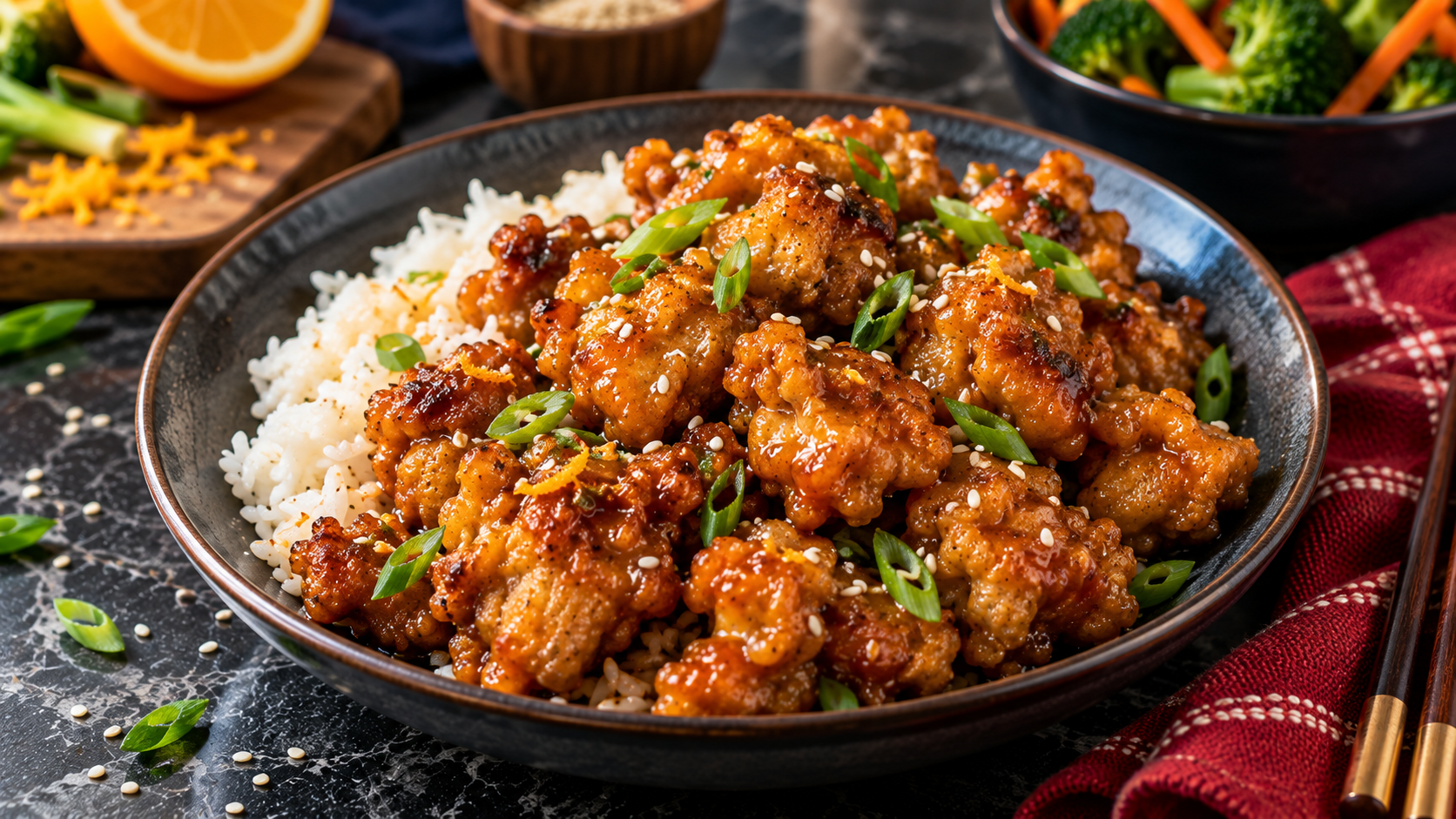

What to Eat in a Day on a Calorie Deficit and High-Protein Diet


Meal Plan Created by Shay Pam
Follow her on:



- Designed for Fat Loss – Every meal is optimized for a calorie deficit while maximizing protein to preserve muscle and promote satiety.
- High Protein Priority – Each meal contains 25-40g of protein to support muscle maintenance during weight loss.
- Simple & Satisfying – Real food that’s easy to prepare and keeps you full throughout the day.
- Strategic Carbohydrate Timing – Carbs are focused around activity periods for energy without excess calories.
- Hydration & Gut Health – Includes green tea for metabolism and probiotic yogurt for digestive health.

Daily Nutrition Breakdown
Macro Distribution: 35-40% Protein · 30-35% Fat · 25-30% Carbohydrates

MEAL 1: Morning – Metabolism Boost
Morning Combo: Green Tea, Chicken Sausages & Protein Smoothie
Metabolism-Boosting Breakfast Combo
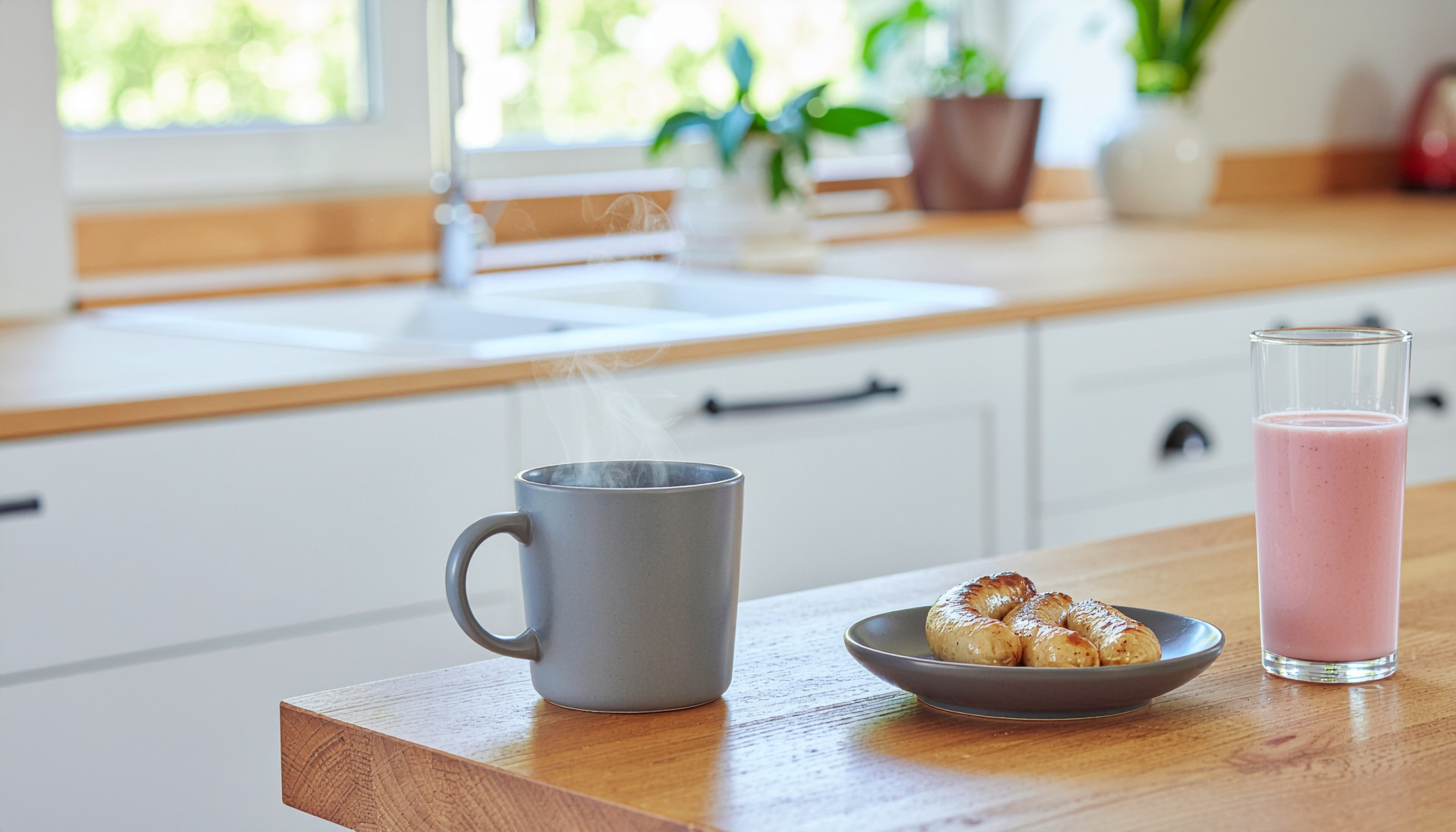
Health Benefits: Green tea contains catechins, particularly EGCG, which may increase metabolism by 3-4% and enhance fat oxidation. Chicken sausages provide approximately 20g of high-quality protein to start your day with sustained energy and satiety. The probiotic yogurt drink supports gut health, which is crucial for nutrient absorption and immune function. The strawberry-protein yogurt smoothie adds another 20-25g of protein plus antioxidants from berries. This combination kickstarts your metabolism while providing lasting fullness.
Money-Saving Tips: Buy chicken sausages in bulk packages and freeze individually. Purchase generic green tea bags instead of premium brands—the health benefits are similar. Buy frozen strawberries for your smoothie; they’re often cheaper than fresh and available year-round. Look for store-brand protein yogurt or consider making your own by adding protein powder to plain Greek yogurt. The Pillars probiotic drink can be replaced with a generic probiotic yogurt drink to save money.
Prep: 5 min | Cook: 8 min | Calories: ~400 | Protein: 35g
Ingredients (1 serving):
- 1 green tea bag
- 3 chicken sausages (6-9 oz / 170-255g total)
- 1 Pillars pre & probiotic yogurt drink (7 oz / 207ml)
- ½ cup strawberries, sliced (2.5 oz / 71g)
- 1 serving protein yogurt (5.3-6 oz / 150-170g)
- Ice (optional, for smoothie)
- Water (for tea and smoothie consistency)
Instructions:
- Prepare green tea: Boil 8 oz (1 cup) of water. Place green tea bag in a mug, pour hot water over it, and steep for 3-5 minutes. Remove tea bag and let cool slightly before drinking.
- Cook chicken sausages: Heat a non-stick skillet over medium heat. Add chicken sausages and cook for 6-8 minutes, turning occasionally, until browned and heated through (internal temperature should reach 165°F).
- Make protein smoothie: In a blender, combine sliced strawberries, protein yogurt, and a handful of ice (if using). Blend until smooth. If too thick, add 1-2 tablespoons of water or milk to reach desired consistency.
- Assemble your morning: Pour probiotic yogurt drink into a glass. Transfer cooked sausages to a plate.
- Serve: Enjoy green tea, sausages, probiotic drink, and smoothie together for a complete, protein-packed morning meal.
- Alternative: If short on time, cook sausages in advance and reheat in the morning. The smoothie can also be prepared the night before and stored in the refrigerator.
Smart Swap Options:
- No chicken sausages? Use turkey sausages, breakfast chicken patties, or 3 eggs.
- No probiotic drink? Use kefir, kombucha, or additional protein yogurt.
- No strawberries? Use blueberries, raspberries, or ½ banana.
- No protein yogurt? Blend regular Greek yogurt with a scoop of protein powder.
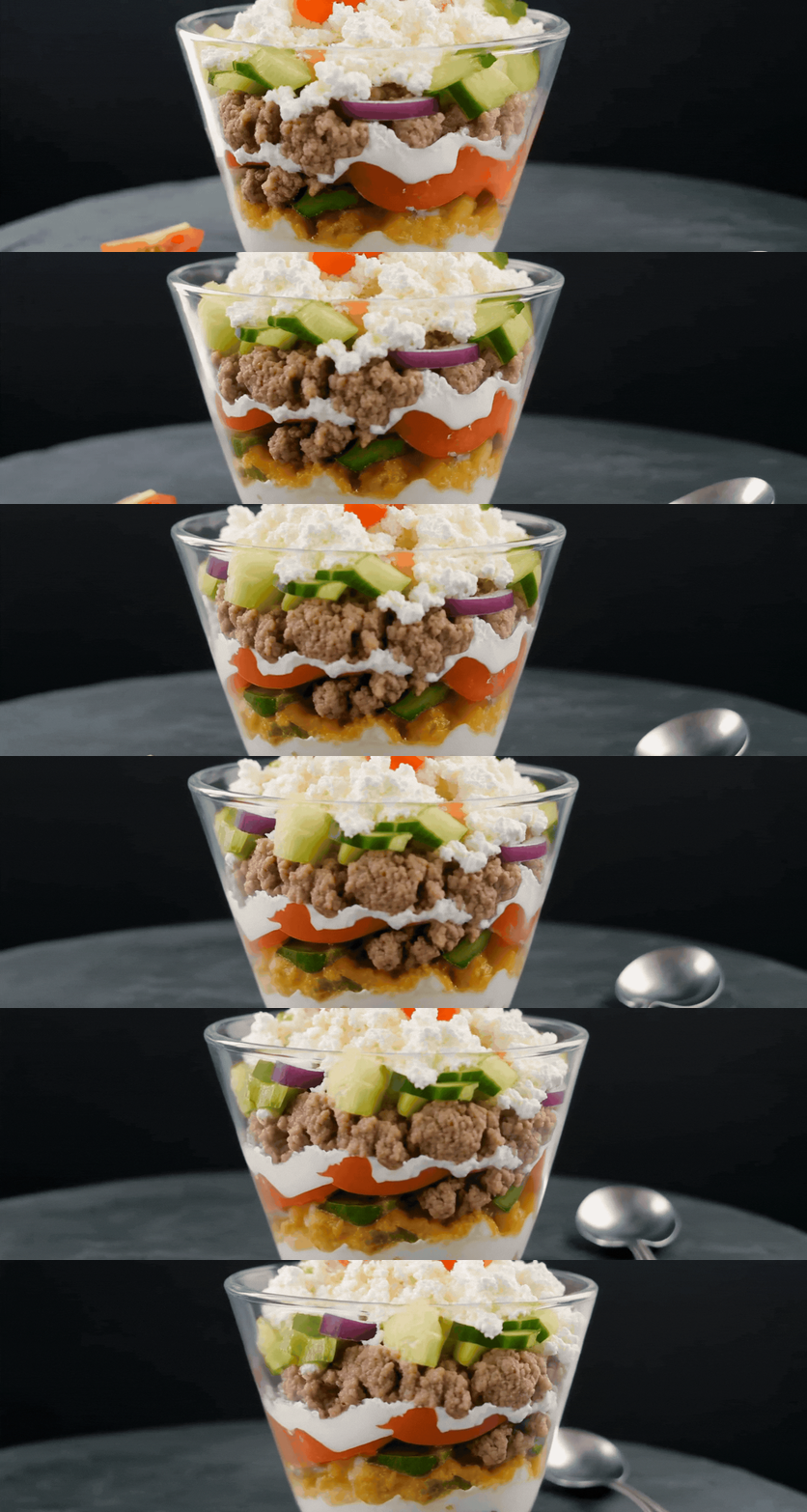
MEAL 2: Lunch – Burger Bowl
Burger Bowl
Deconstructed Burger with Cottage Cheese
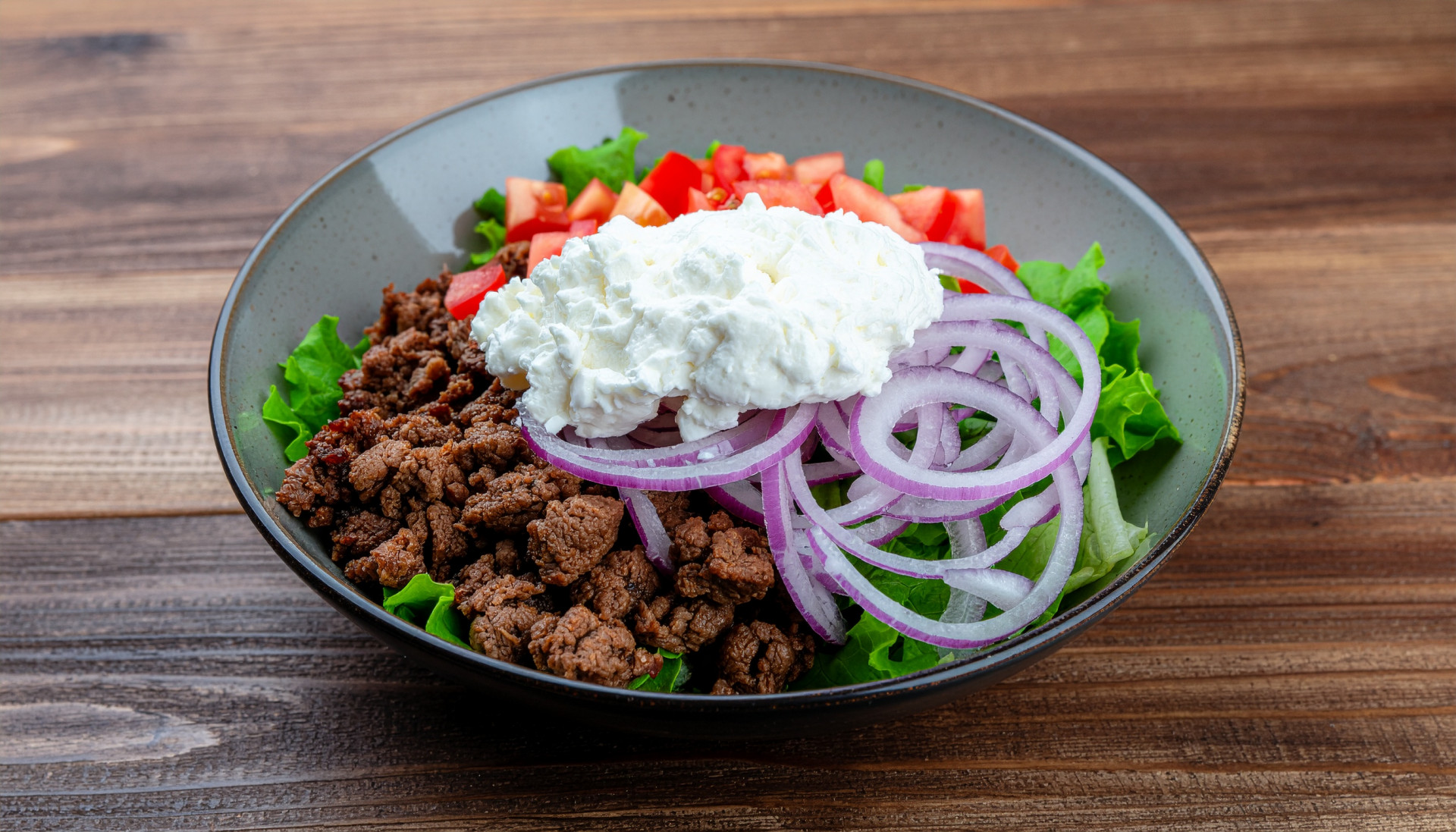
Health Benefits: Ground beef (80/20 or 90/10) provides approximately 35g of complete protein along with iron, zinc, and B vitamins essential for energy production. The cottage cheese adds another 14g of slow-digesting casein protein, which promotes prolonged satiety—perfect for staying full through the afternoon. Fresh lettuce, onion, and tomatoes provide fiber (5g), vitamins, and antioxidants with minimal calories. This deconstructed approach gives you all the flavors of a burger without the empty calories from a bun.
Money-Saving Tips: Purchase ground beef in family packs and freeze individual 8oz portions. A whole head of lettuce is cheaper than pre-washed salad mixes—wash and chop it yourself. Buy cottage cheese in larger containers rather than single servings. Tomatoes and onions are inexpensive year-round. Skip the bun entirely to save both calories and money. This entire meal costs less than a fast-food burger with fries.
Prep: 10 min | Cook: 10 min | Calories: ~500 | Protein: 40g
Ingredients (1 serving):
- 8 oz ground beef (227g) – 80/20 or 90/10 lean
- 2 cups lettuce, chopped (2 oz / 57g)
- ¼ cup onion, diced (1 oz / 28g)
- ½ cup tomatoes, diced (3 oz / 85g)
- ½ cup cottage cheese (4 oz / 113g)
- ½ teaspoon salt
- ¼ teaspoon black pepper
- ½ teaspoon garlic powder
- Optional toppings: pickles, mustard, sugar-free ketchup
Instructions:
- Cook the ground beef: Heat a non-stick skillet over medium-high heat. Add ground beef, breaking it up with a spatula as it cooks. Season with salt, pepper, and garlic powder.
- Continue cooking for 7-10 minutes, stirring occasionally, until beef is fully browned and no pink remains. Drain any excess fat if desired (especially if using 80/20 beef).
- Prepare vegetables: While beef cooks, wash and chop lettuce into bite-sized pieces. Dice onion and tomatoes into small, uniform pieces.
- Assemble the bowl: In a large bowl, create a bed of chopped lettuce.
- Add the cooked ground beef on top of the lettuce.
- Scatter diced onion and tomatoes around the beef.
- Spoon cottage cheese over the top of the bowl.
- Add optional toppings: If using, add pickle slices, a drizzle of mustard, or sugar-free ketchup.
- Mix and enjoy: Toss everything together or eat as layered. The warm beef will slightly wilt the lettuce, similar to a warm salad.
- Meal prep tip: Store cooked beef separately from fresh vegetables. Assemble just before eating to maintain texture.
Smart Swap Options:
- No ground beef? Use ground turkey, chicken, or plant-based crumbles.
- No cottage cheese? Use Greek yogurt, ricotta cheese, or avocado.
- No lettuce? Use spinach, arugula, or shredded cabbage.
- Want more volume? Add sliced cucumbers, bell peppers, or mushrooms.
SNACK: Beef Jerky & Cheese
Beef Jerky & Cheese
Portable Protein Power Snack
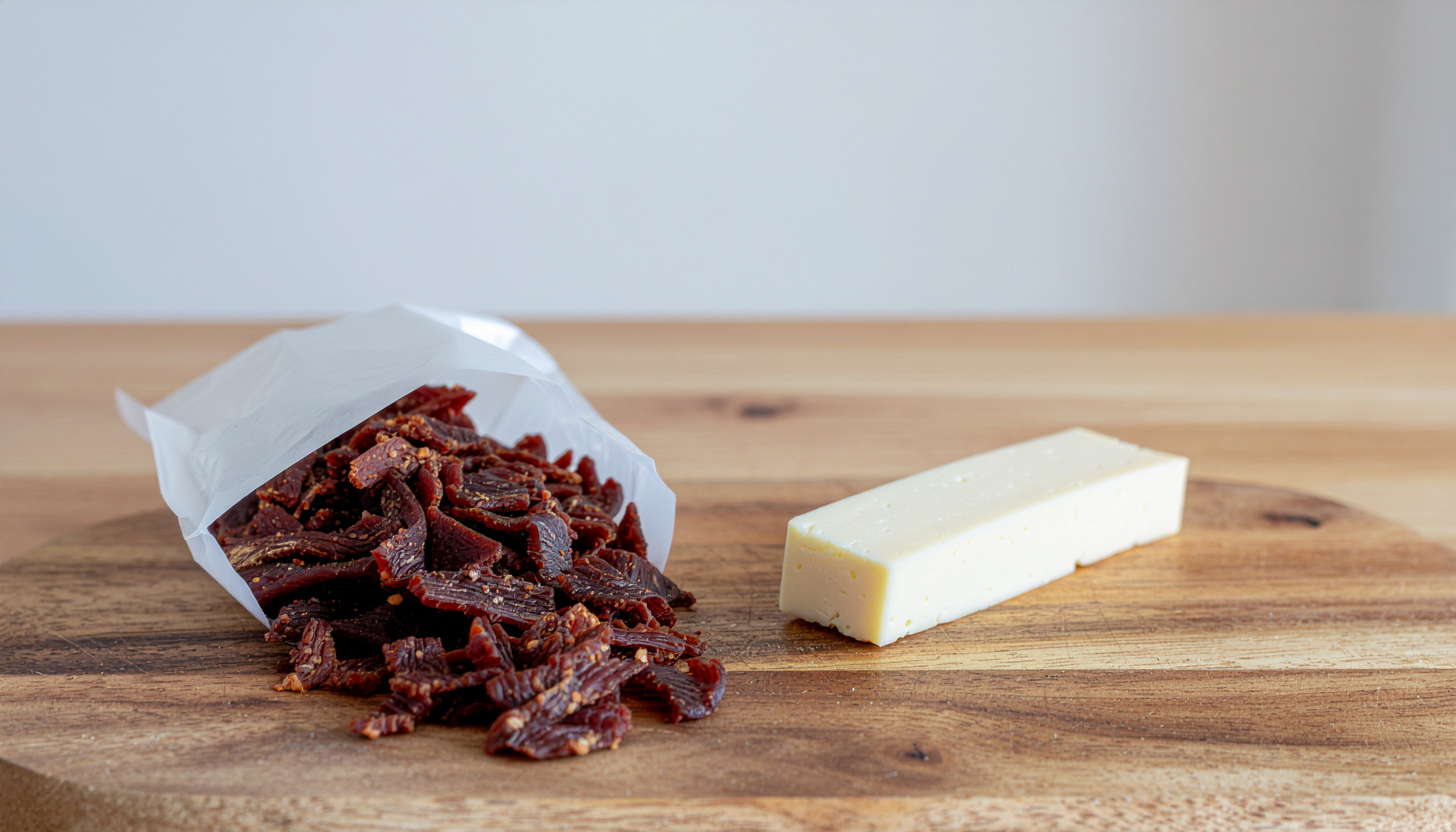
Health Benefits: Beef jerky is a concentrated source of protein (approximately 10g per ounce) with minimal carbohydrates and fat. The drying process preserves nutrients while removing water weight, making it one of the most portable, shelf-stable protein sources available. String cheese provides casein protein (7g per stick) that digests slowly, promoting prolonged satiety between meals. The combination offers a balanced amino acid profile and approximately 20g of total protein for only 150 calories, making it one of the most efficient protein-to-calorie snacks available.
Money-Saving Tips: Purchase beef jerky in larger bags rather than single-serving packs—portion it yourself into small bags. Look for store-brand or generic beef jerky; the nutritional profile is often identical to premium brands. Buy string cheese in multi-packs when on sale and freeze extras (they thaw perfectly). Consider making your own beef jerky in a dehydrator or low-temperature oven for significant long-term savings. This snack still costs less than most protein bars or shakes.
Prep: 1 min | Cook: 0 min | Calories: ~150 | Protein: 20g
Ingredients (1 serving):
- 1 bag beef jerky (1-2 oz / 28-57g)
- 1 string cheese stick (1 oz / 28g)
Instructions:
- Open packaging: Tear open the beef jerky bag. Unwrap the string cheese stick from its plastic wrapping.
- Portion control: If using a large bag of jerky, measure out approximately 1-2 ounces (about the size of your palm) into a small bowl or plate.
- Enjoy: Eat the beef jerky and string cheese together or separately. The jerky provides a savory, chewy texture while the cheese offers creaminess.
- Timing: This snack is perfect for mid-afternoon when energy dips, pre-workout for sustained energy, or anytime you need a protein boost between meals.
- Storage: Keep beef jerky in a cool, dry place. Store string cheese in the refrigerator until ready to eat.
- Hydration tip: Drink a glass of water with this snack, as both jerky and cheese are relatively low in moisture.
Smart Swap Options:
- No beef jerky? Use turkey jerky, beef sticks, or pepperoni slices.
- No string cheese? Use cheese cubes, Babybel cheese, or sliced cheese.
- Vegetarian option? Use roasted chickpeas or edamame with cheese.
- Lower sodium? Look for low-sodium beef jerky or make your own.
MEAL 3: Dinner – Shrimp and Rice
Shrimp and Rice
Lean Protein with Smart Carbs
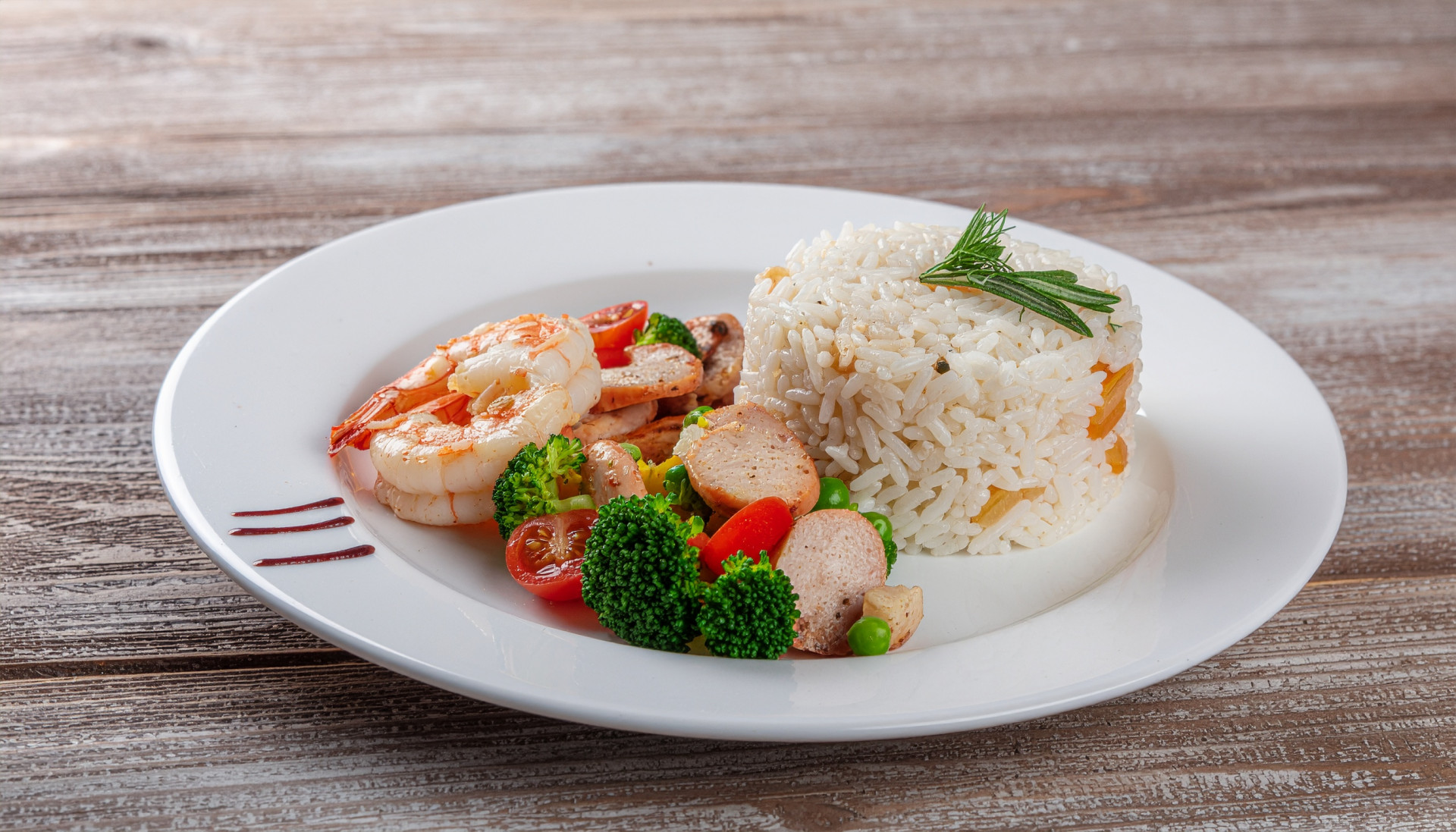
Health Benefits: Shrimp is one of the leanest protein sources available, providing 24g of protein per 4oz serving with only 1g of fat and 120 calories. It’s also rich in selenium, an antioxidant that supports thyroid function and reduces inflammation. Jasmine rice provides easily digestible carbohydrates to replenish glycogen stores, especially beneficial if you exercised earlier in the day. The chicken apple sausage adds another 15g of protein and flavor complexity. Mixed vegetables contribute fiber, vitamins, and volume with minimal calories, making this a nutrient-dense, satisfying dinner.
Money-Saving Tips: Purchase frozen shrimp—it’s often cheaper than fresh and just as nutritious. Buy jasmine rice in bulk bags for significant savings per pound. Use frozen mixed vegetables instead of fresh; they’re pre-chopped, last longer, and are usually more economical. If chicken apple sausage is expensive, substitute with regular chicken sausage or additional shrimp. This meal serves 2-3 people, making it cost-effective for families or meal prep.
Prep: 10 min | Cook: 20 min | Calories: ~550 (per serving) | Protein: 45g
Ingredients (2-3 servings):
- 1 lb shrimp, peeled and deveined (16 oz / 454g)
- 2 tbsp oil (1 oz / 30ml) – divided
- 1 cup jasmine rice, dry (7 oz / 200g)
- 1 chicken apple sausage (3-4 oz / 85-113g)
- 1 cup frozen mixed vegetables (5 oz / 142g)
- ¼ teaspoon salt
- ¼ teaspoon black pepper
- ¼ teaspoon paprika or Old Bay seasoning
- Water (for cooking rice)
Instructions:
- Cook the rice: Rinse 1 cup of jasmine rice under cold water until water runs clear. In a rice cooker or pot, combine rice with 1.5 cups of water. Cook according to package directions (typically 15-20 minutes).
- Prepare shrimp: Pat shrimp dry with paper towels. Season with salt, pepper, and paprika or Old Bay seasoning.
- Cook shrimp: Heat 1 tablespoon oil in a large skillet over medium-high heat. Add shrimp in a single layer and cook for 2-3 minutes per side, until pink and opaque. Remove from pan and set aside.
- Cook sausage: In the same skillet, add chicken apple sausage. Cook for 5-7 minutes, turning occasionally, until browned and heated through. Remove and slice into rounds.
- Heat vegetables: In the same skillet, add remaining 1 tablespoon oil if needed. Add frozen mixed vegetables and cook for 4-5 minutes until heated through and any excess moisture evaporates.
- Combine: Return shrimp and sliced sausage to the skillet with vegetables. Toss everything together gently to combine and heat through (about 1-2 minutes).
- Plate: Fluff cooked rice with a fork. Divide rice among plates or bowls. Top with the shrimp, sausage, and vegetable mixture.
- Serve: Enjoy immediately. For extra flavor, squeeze fresh lemon juice over the shrimp or add a sprinkle of fresh herbs like parsley or cilantro.
- Storage: Leftovers keep well in the refrigerator for up to 3 days. Reheat gently to prevent shrimp from becoming rubbery.
Smart Swap Options:
- No shrimp? Use chicken breast, scallops, or firm tofu.
- No jasmine rice? Use brown rice, quinoa, or cauliflower rice for lower carbs.
- No chicken apple sausage? Use regular chicken sausage, turkey sausage, or omit.
- No frozen mixed vegetables? Use fresh broccoli, bell peppers, or zucchini.
The Science of Calorie Deficit & High Protein
- Thermic Effect of Food (TEF) – Protein has the highest TEF at 20-30%, meaning 20-30% of its calories are burned during digestion, compared to 5-10% for carbs and 0-3% for fats.
- Muscle Preservation – During calorie restriction, adequate protein (0.7-1g per pound of body weight) preserves lean muscle mass, ensuring weight loss comes primarily from fat stores.
- Satiety Hormones – Protein increases production of peptide YY and GLP-1 (satiety hormones) while decreasing ghrelin (hunger hormone), naturally reducing calorie intake.
- Blood Sugar Stability – High-protein meals prevent blood sugar spikes and crashes, reducing cravings and energy fluctuations throughout the day.
- Metabolic Adaptation Prevention – Sufficient protein intake helps maintain resting metabolic rate during weight loss, preventing the common “metabolic slowdown.”
Protein Prioritization Strategies
Evenly spaced every 3-4 hours
Include protein in every snack
Aim for 1g per lb of goal weight
Combine plant proteins
Prioritize lean cuts
Include varied sources
Pre- & post-workout protein
Casein protein before bed
Consistent daily intake
Meal Prep for Calorie Deficit Success
Chop vegetables for week
Portion beef jerky & cheese
Cook rice for 3 days
Assemble burger bowls
Shrimp cooked day-of
Smoothie blended fresh
Pre-portion snacks
Measure oil for cooking
Track condiments
Calorie Adjustment Guide
4 oz ground beef
½ serving shrimp dinner
Skip probiotic drink
8 oz shrimp at dinner
Add ¼ avocado to lunch
Include 1 tbsp nuts as snack
Increase all portions by 25%
Add healthy fats to each meal
Include complex carb snacks
Individual Needs Disclaimer: This 1,500-1,700 calorie meal plan is designed as an example for those in a calorie deficit. Individual calorie needs vary significantly based on age, gender, height, weight, activity level, and metabolic health. A safe calorie deficit is typically 300-500 calories below maintenance. Always consult with a healthcare provider or registered dietitian before starting any calorie-restricted diet, especially if you have underlying health conditions.
Complete Shopping List for One Day
Ingredients:
Proteins
- 6 chicken sausages
- 8 oz ground beef
- 1 bag beef jerky
- 1 stick string cheese
- 1 lb shrimp
- 1 chicken apple sausage
Dairy & Probiotics
- 1 bottle pre & probiotic yogurt drink
- 1 serving protein yogurt
- 1/2 cup cottage cheese
Produce
- 1/2 cup strawberries
- 2 cups lettuce
- 1/2 onion
- 1/2 cup diced tomatoes (s)
- 1 cup frozen mixed vegetables
Pantry & Grains
- 1 cup jasmine rice
- 1 green tea bag
- 2 tbsp oil
Seasonings
- 3/4 tsp salt
- 1/2 tsp black pepper
- 1/2 tsp garlic powder
- 1/4 tsp paprika (or Old Bay)
Ingredients are subject to availability at local stores. Unavailable items will be automatically substituted at best-effort.


Iron-Rich Pumpkin Seed Butter
Mussel Linguine